Diagnostic Fee vs Trip Charge Explained
Trip charge, service call fee, and diagnostic fee explained for trades: what each covers, when to credit or waive it, and how to put it on an invoice.


The customer watches you pull up to the house, and the first question is “Why am I paying two fees before you touch anything?” Here is the short answer. A trip charge pays for getting to the job. A service call fee pays for the visit plus a quick look. A diagnostic fee pays for the time you spend finding the problem. Pick the one that matches your work, name it before you roll, and put it on the invoice as its own line.
Trip charge vs service call fee vs diagnostic fee: what is the difference?
The three names get mixed up because shops use them loosely. One survey of 45 trade companies found the same first visit labeled “service call,” “diagnostic,” “dispatch,” or “trip and diagnostic,” depending on the shop (Advai). Pick one name for your business and stick with it.
Working definitions most shops use:
| Trip charge | Service call fee | Diagnostic fee | |
|---|---|---|---|
| Pays for | Drive time, fuel, truck wear, dispatch | The visit plus a limited first look | Your troubleshooting time and testing |
| Billed when | You show up, even if no work follows | You show up and inspect | You trace a fault (leak, no-cool, dead circuit) |
| Usually includes travel? | Yes, that is all it is | Usually yes | Depends on your wording |
| Credited toward repair? | Rarely | Often | Often |
| Common in | Rural or wide service areas | Plumbing, HVAC, electrical | HVAC, electrical, appliance, auto |
If you only remember one rule: charge one fee for the first visit, call it one thing, and say what it covers. Splitting a trip charge and a diagnostic fee into two lines can confuse the customer when the diagnostic fee already covers travel. One source in the research even argues against splitting them in that case (The Service Operator).
Searching “diagnostic fee” mostly returns car dealer pages. Different game. This guide is for people who work in the customer’s home or shop floor: plumbers, HVAC techs, electricians, handymen.
What does a trip charge cover?
A trip charge covers getting your truck to the address and nothing else. Gas, drive time, wear, and the slot on your calendar you can’t resell. Shops commonly set it around the $50–$100 range, with plumbing trip charges clustering near the upper end (Dalton Mills).
Use a trip charge when drive time is the real cost: a customer 40 minutes out, a second stop in the same area, or a callback on a job you already quoted. In a tight service area with short drives, a trip charge on its own often reads as nickel-and-diming. Fold it into a service call fee instead.
What does a service call fee cover?
A service call fee covers the visit plus a limited first inspection, and it usually includes travel. Reported ranges run about $70–$200 for HVAC, $50–$250 for plumbing, and $100–$200 for electrical (Wakeman AI). Those numbers come from contractor and vendor blogs, not a standard. Treat them as a sanity check, then price against your own costs and your local market.
The phrase “service call charge” means the same thing. Customers search both. Use whichever one you put on your quote and keep it the same everywhere.
What does a diagnostic fee cover?
A diagnostic fee covers the time and skill it takes to find what is wrong, not the repair itself. You are selling the answer: a dead compressor, a tripped GFCI that is really a bad run, a slow drain that is a root problem. Reported diagnostic ranges are about $70–$200 for HVAC, $50–$150 for plumbing, and $100–$200 for electrical, with many shops landing near the middle (Tradesly, SimplyWise).
Diagnostic time is real labor. A tech who spends 45 minutes with a meter and a manifold gauge set has done a job, whether the customer approves the fix or not. That is the case for charging it.
What should you charge? Set it from your costs
You should set each fee from three numbers: drive time, truck cost, and how long a typical first diagnosis takes you. Do not copy a competitor’s price. Their overhead isn’t yours.
- Drive and truck cost. Average round trip in your area, times your cost per mile or per hour.
- Diagnosis time. Your typical first-visit labor, at your hourly rate. See how to calculate your hourly rate if you have never worked it out.
- A floor. The lowest amount that makes a visit worth leaving the shop for.
Then check the number against local rates. The Advai survey found standard service, trip, and diagnostic fees mostly sitting around $45–$150, though advertised fees ran from $25 to $399. A wide spread tells you the market lets you price on the value of your time. For more on setting prices, see the service pricing framework and flat rate vs hourly.
Plumber, HVAC tech, electrician: what changes by trade
- Plumbing. Many calls are emergencies with a quick diagnosis, so the service call fee often does the work and a separate diagnostic fee is rare. Trip charges show up for rural calls.
- HVAC. Diagnosis is the main job. A diagnostic fee, credited to the repair, is the common setup. See HVAC invoice requirements.
- Electrical. Tracing a fault can eat an hour. Charge for the diagnosis, and say up front whether it covers the first hour of troubleshooting.
After-hours and emergency rates: state them before you dispatch
After-hours and emergency fees should be named on the phone before you leave, never added on site. Some companies publish emergency fees of $199 or an emergency-only dispatch fee of $399, per the Advai survey. Multipliers like time-and-a-half or double time for nights and weekends are common talk in the trades, but the research found no sourced standard, so set yours from your own costs and say it plainly.
A disclosure checklist worth reading out before you roll:
- The fee amount and what it covers
- Whether it is credited, waived, or kept if the customer approves the repair
- Any after-hours or emergency surcharge
- How labor is billed after the first visit
- A cancellation fee, if you have one
- That you will get approval before doing work above the quote
That list tracks ServiceVisit’s pre-dispatch checklist. Say it on the call and put it in the text or quote you send. No surprise charges is the whole game here: a customer who hears “free estimate” and then sees a fee feels tricked, and you pay for it in reviews.
Should you credit the fee toward the repair?
Crediting the diagnostic fee toward an approved repair is common in HVAC, plumbing, and electrical, but there is no universal rule, and shop policies vary (EosLog). Pick a policy and write it down.
A simple rule you can reuse on every job:
- Customer approves the repair: credit the fee (or part of it) against the work.
- Customer says no: keep the fee. You did the diagnosis.
- Warranty or callback on your own work: waive it.
- Big job (replacement, panel upgrade): waive or credit in full, because the job pays for the visit.
- Repeat customer: your call, but make it a choice you made, not something you forgot to charge.
Use “credited” and “waived” for different things. Credited means the customer paid and you applied it to the repair. Waived means you never billed it. Mixing the two makes your books hard to read.
What do the laws say? Disclose in writing
Several states require you to disclose service, trip, or diagnostic charges before the work. Rules differ by state, and these are examples, not legal advice. Check your own state, or ask an attorney.
- California. A service-and-repair contractor may charge only one service charge, which covers service, trip, and inspection fees, and must disclose the amount when the customer starts the call (Bus. & Prof. Code § 7159.14). For repair estimates, a diagnostic fee requires advance written disclosure (§ 9844).
- Ohio. The Attorney General says customers have a right to an estimate for repairs over $25, and suppliers must disclose service, travel, and diagnostic charges (Ohio AG).
- Minnesota. On request, you give a written estimate before repairs, with notice that a service-call or estimate charge may be added to the repair price (Minn. Stat. § 325F.58).
The common thread: say it first, say it in writing.
How to show each fee on the invoice
Each fee should be its own line item, with the credit as a separate negative line. Don’t silently net the numbers. A vague “service fee” line makes a one-person shop look sloppy. Clear labeled lines look like a staffed office.
Sample layout (amounts are placeholders):
| Line | Description | Amount |
|---|---|---|
| 1 | Diagnostic visit: troubleshooting and travel | [your fee] |
| 2 | Repair: replace failed capacitor, parts and labor | [repair total] |
| 3 | Credit: diagnostic fee applied to approved repair | −[your fee] |
If you waive it: keep line 1 on the invoice, add a negative line, and write the reason (“waived: warranty callback”). The customer sees the value you gave. For the full field list, see 15 essential fields every invoice must include, and if you need to correct one later, a credit memo is the clean way.
Pre-visit, the same fees belong on your quote. Here is plain wording for the phone or text:
Our visit fee is [amount]. It covers the drive and finding the problem. If you go ahead with the repair, we credit it toward the work. You will get the repair price before we start anything.
See writing an estimate for services for more on setting expectations early.
Save each fee in your item library
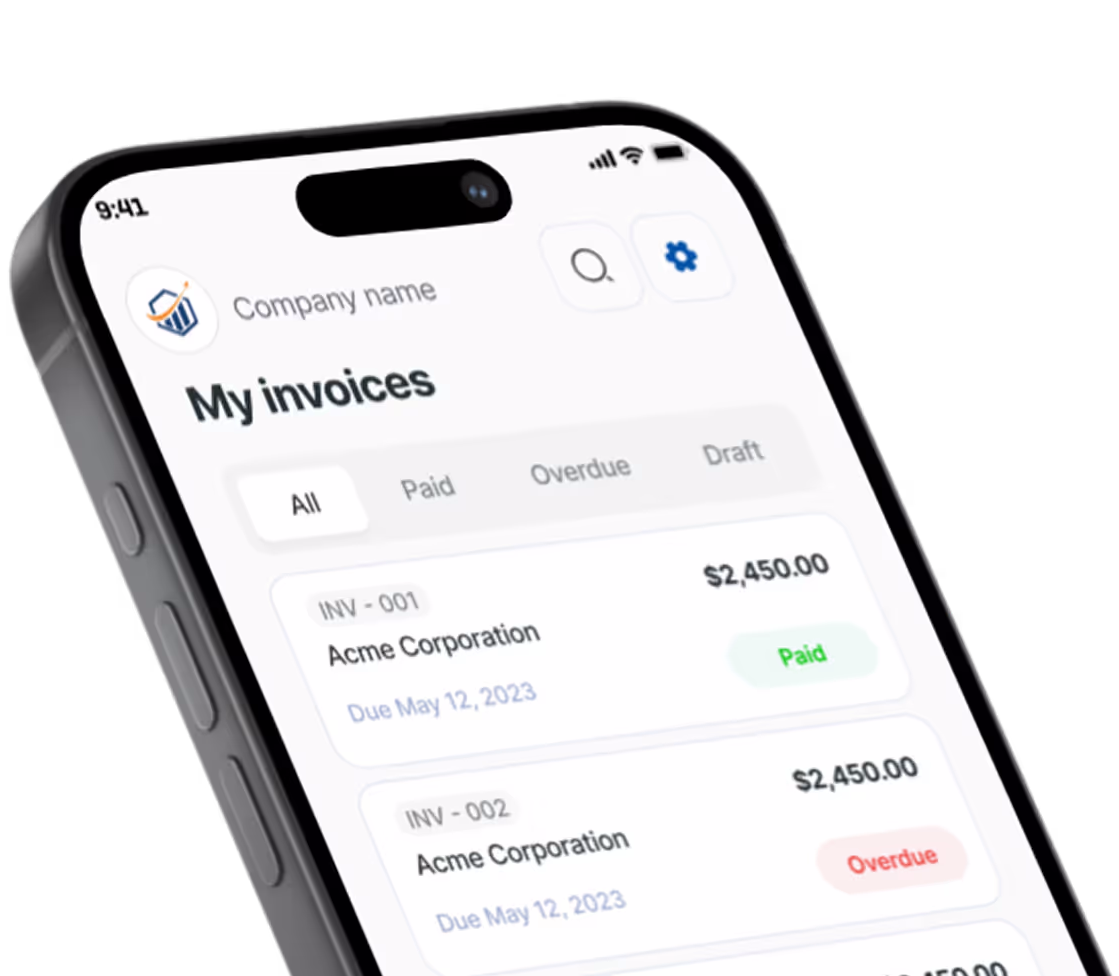
Retyping the same fees on every job is how they get left off. In Pronto Invoice you can save a trip charge, a service call fee, a diagnostic fee, and an after-hours rate as items, so each one is a tap when you build the invoice from your phone. Five steps, client to send, before you leave the driveway. You connect your own Stripe or PayPal account, so there is no payment processing markup on the fee you collect. Start at prontoinvoice.com, and see the plumbing invoice guide if plumbing is your trade.
FAQ
Is a diagnostic fee the same as a trip charge?
No. A trip charge pays for travel. A diagnostic fee pays for troubleshooting labor. Many shops bundle both into one visit fee, and that is fine if the line says what it covers.
Can I charge more than one fee on the same job?
Yes, in most places, but state rules differ. California, for example, allows only one service charge that covers service, trip, and inspection. Check your state first.
Do customers expect to pay a trip charge?
Most expect some fee for a visit. They object to surprises, not fees. Telling them the amount and what it covers before you dispatch is what keeps the argument off the doorstep.
What if the customer says no to the repair?
Keep the fee. You spent time and fuel finding the problem. That is the reason to tell them the policy on the phone.
There is always something more to read

10 Steps to Set Up a Small Business: The Complete Startup Checklist for 2025
Learn 10 steps to set up a small business with this checklist covering LLC, banking, invoicing, insurance, and pricing.

1099 Requirements for Small Business (2026): Complete Guide
$600 threshold is now $2,000 for 2026. Learn 1099 requirements: 1099-NEC, W-9 rules, deadlines, filing.

How to Accept Payments Online
No website needed. Here is how to start accepting online payments as a small business — processors, payment links, and invoicing in one afternoon.